A Paediatric Haematologist Who Has Managed Over 200 Sickle Cell Children Reveals the Daily System That Helps Reduce the Risk of Crises — So the Fear That Keeps You Awake at Night Finally Has a Plan. Alongside Your Doctor.
Her doctor said: "Keep her hydrated." But how much water? When? Which signs mean dehydration is starting? Which foods support her blood cells? Which triggers to watch for? "Keep her hydrated" is a sentence. Not a system. And her daughter has been hospitalised 4 times in 6 years because a sentence is not enough.
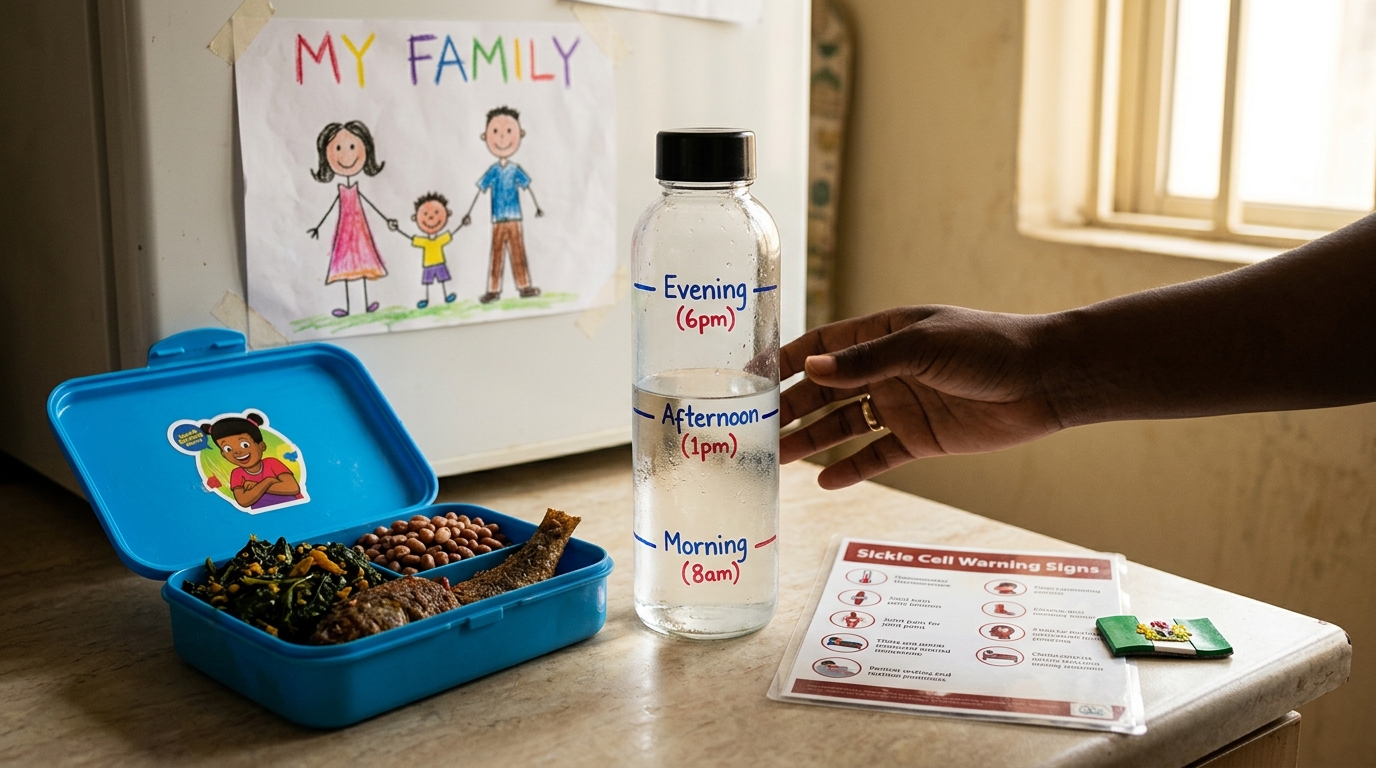
The fear.
It is the first thing you feel when your child wakes up and says "Mummy, my body is paining me." It is the calculation that begins instantly: Is this a crisis starting? Should I give water first or go to the hospital? How bad is it on a scale she can't articulate because she is 6? It is the drive to the hospital with your child in the back seat, crying, while you drive as fast as Lagos traffic allows and pray it is not the big one. The fear never fully leaves. Not when she is well. Not when she is playing. Not when she is sleeping. Because the next crisis could start at any time. And you don't know when. You only know it will come.
Your daughter has sickle cell disease. SS genotype. Diagnosed at 8 months. She is 6 now. She takes her folic acid every day. She takes her routine medications. She sees her haematologist every 3 months. But between those appointments — the 89 days between each visit — you are managing daily on a sentence: "Keep her hydrated." That sentence is the entirety of your daily prevention system. And it is not enough.
"Adaeze was diagnosed at 8 months. She is 6 now. She has been hospitalised 4 times for vaso-occlusive crises. The first time, I didn't recognise the signs. She had been fussy all day. I thought she was tired. By 9pm, she was screaming. We rushed to the hospital. She was admitted for 5 days. The doctor said afterwards: 'If you had caught the early signs — the restlessness, the slight fever, the change in her palms — and started aggressive hydration earlier, the crisis might have been less severe.'"
"Might have been less severe. Those 5 words have haunted me for 5 years. Because they mean: there were signs. I missed them. Not because I'm a bad mother. Because nobody taught me what to look for. Nobody gave me a system. The haematologist says 'keep her hydrated' in a 15-minute appointment. That's correct. But it's a sentence. Not a daily plan."
"I have spent N1.2 million on sickle cell care in 6 years. Hospital admissions: N800,000. Medications: N250,000. Supplements and special foods: N150,000. N1.2 million on RESPONSE. Zero on a daily PREVENTION system that might help reduce how often we end up in that hospital. The hospital treats the crisis. Nobody teaches me how to help reduce the risk of the crisis starting."
If your child has sickle cell disease, if "keep them hydrated" is the only daily instruction you received, if the hospital admissions keep happening and you want to help reduce their frequency, if the fear of the next crisis controls your daily life, keep reading. Alongside your haematologist.

Funke A.
38. Lagos. Daughter diagnosed at 8 months. 4 hospitalisations in 6 years. Until Dr. Adeola showed her: "keep her hydrated" is correct but incomplete. The daily system was missing.
Hydration System
Not "keep them hydrated." A calibrated daily water intake based on your child's weight, age, and activity level. When to drink. How much. Signs that dehydration is starting before the crisis starts.
Nutrition Support
Specific foods that support red blood cell health: iron-rich foods, folic acid sources, anti-inflammatory foods. Which foods to increase. Which to avoid. Your market. Your kitchen.
Temperature Management
Cold triggers crises. Heat causes dehydration. The temperature management system: what to do in harmattan, in rainy season, in extreme heat. Dressing. Bathing. Environmental control.
Warning Signs Dashboard
The early signs a crisis may be developing: restlessness, pale palms, slight fever, yellow eyes, dark urine, specific pain patterns. What to do at EACH sign. When to hydrate aggressively. When to go to hospital.
admissions
response
prevention
"Keep Them Hydrated"
Correct. But how much water for a 6-year-old with SS genotype? When? How do you know dehydration is starting before the crisis starts? A sentence is not a system. "Keep them hydrated" without specifics is like "eat well" without a meal plan.
Routine Haematologist Visits (Every 3 Months)
Essential. Non-negotiable. But 3 months is 89 days between visits. Who manages the daily prevention in those 89 days? The parent. With what system? "Keep them hydrated." That's it.
Reactive Management
Crisis happens → rush to hospital → treatment → discharge → wait for next crisis. The cycle of response without daily prevention. The hospital manages the crisis excellently. Nobody reduces the frequency of the crises.
Google: "Sickle Cell Prevention"
Contradictory advice. Outdated articles. Generic information not specific to your child's age, weight, or genotype. No daily system. No warning signs protocol. Information without structure is anxiety, not help.
Folic Acid and Medications Alone
Your child takes folic acid. They take their prescribed medications. Good. Essential. But medication is one layer. Hydration, nutrition, temperature management, and early warning sign recognition are the daily layers that medication doesn't cover.
Fear as the Management System
Watching. Worrying. Checking every complaint. "Is this a crisis?" every time your child says they're in pain. Fear is not a system. Fear is exhausting, constant, and it doesn't actually protect your child. A system does.
A parents' support meeting at the sickle cell clinic. Dr. Adeola Balogun. 55. Paediatric haematologist for 25 years. She had managed over 200 children with sickle cell disease. She knew which families had fewer crisis admissions. And the difference was not genotype. It was not luck. It was system.
The Calibrated Hydration System
How much water your child needs based on their weight, age, and daily activity. Not a generic "8 glasses." A specific calculation. Morning hydration targets. Afternoon targets. Evening targets. How to recognise the 5 early signs of dehydration BEFORE they trigger a crisis: dark urine, dry lips, reduced energy, sunken eyes, reduced urination frequency. The hydration system that turns "keep them hydrated" from a sentence into a daily practice. Alongside your haematologist.
The Blood Cell Nutrition Plan
Specific foods that support red blood cell health in sickle cell children: iron-rich foods (dark leafy vegetables, beans, organ meats), folic acid sources (beyond the supplement), anti-inflammatory foods that may help reduce pain frequency, and foods to avoid (those that increase dehydration or inflammation). Your market. Your kitchen. Meals your child will actually eat. Alongside your haematologist.
The Temperature Shield
Cold is a known crisis trigger. Extreme heat causes dehydration. The system covers: harmattan management (clothing layers, warm baths, room temperature), rainy season precautions (wet clothes protocol, cold exposure response), and heat management (hydration adjustment, activity modification). Season-by-season, weather-by-weather. The temperature triggers your child faces daily, managed with specific actions. Alongside your haematologist.
The Warning Signs Dashboard
The early signs that a crisis may be developing — before the screaming, before the emergency drive, before the hospital admission. 6 warning signs with a specific action for each: (1) Restlessness → begin aggressive hydration. (2) Pale palms → check temperature, prepare for clinic. (3) Slight fever → medication + hydration + monitoring protocol. (4) Yellow eyes → haematologist call within hours. (5) Dark urine → emergency hydration response. (6) Specific pain patterns → the decision tree: home management vs hospital. Earlier detection. Earlier response. Potentially less severe episodes. Alongside your haematologist.
Alongside Your Haematologist
What to discuss at your next appointment. How to share your daily tracking data with your doctor. Which additional tests to request. How the daily system supports — never replaces — your child's medical care. The haematologist manages the disease. The daily system supports the child between appointments. Both together. 89 days between visits. Every day covered.
The hydration system was running. Funke knew exactly how much water Adaeze needed daily — calibrated to her weight. The nutrition plan replaced the generic "eat well" with specific meals. The temperature management was automatic: harmattan clothing protocol, warm bath schedule, room temperature monitoring. And the warning signs dashboard sat on the fridge door.
"The fear didn't disappear. The fear never disappears when your child has sickle cell. But the fear had a system now. When Adaeze was restless, I didn't panic. I checked the dashboard: restlessness → begin aggressive hydration, monitor temperature, check palms. I had steps. I had a protocol. I had something to DO instead of something to fear."
"Before the system: 4 hospital admissions in 6 years. An average of one every 18 months. Since the system began: 5 months without a hospital admission. Not because the disease changed. Not because the genotype improved. Because the daily support system was running: hydration calibrated, nutrition targeted, temperature managed, warning signs caught earlier."
"Did the system cure sickle cell? No. Nothing cures sickle cell. It is a genetic condition that requires lifelong medical management. But the system gave me something the diagnosis never did: daily actions that help support my child's health between appointments. The 89 days between haematologist visits are no longer empty. They are filled with hydration targets, nutrition plans, temperature protocols, and a warning signs dashboard that tells me what to do before the crisis fully develops."
"The fear is still here. But the fear now has a system. And a fear with a system is manageable. A fear without a system is paralysing. I was paralysed for 6 years. I am managing now. Alongside our haematologist."
"The Calibrated Hydration System changed our mornings. I now know exactly how much water Chidera needs before school, during school, and after. Not 'drink water.' A number. Measured. Tracked. The dark urine that used to surprise us by 3pm stopped by Week 2 because the hydration target was actually being met."
"The Warning Signs Dashboard is on my fridge door. When my son said 'my hand is paining me' last month, I checked the dashboard instead of panicking. Pain pattern → check location, check temperature, begin hydration, monitor for 2 hours. The pain resolved with aggressive hydration. What would have been an emergency drive became a managed response."
"The Temperature Shield saved us during harmattan. I had specific clothing protocols, bath temperature guidance, and room temperature targets. My son usually has a crisis every harmattan. This harmattan: no crisis. Same cold. Different management."
"I'm in London. Nigerian. My daughter has SS genotype. The NHS haematologist is excellent but I see her every 4 months. The daily system covers the 120 days between visits. The nutrition plan uses foods available at both Brixton Market and Tesco. Practical."
"I took the daily tracking sheet to my haematologist. She looked at the hydration data, the warning signs log, and said: 'This is exactly the kind of daily management I wish all my sickle cell parents did.' The doctor validated the system. It works alongside the clinic."
"This guide does NOT promise zero crises. Sickle cell crises cannot be fully prevented. It promises a daily system that helps reduce the risk and catches warning signs earlier. That is the difference between panic and management. Alongside our haematologist."
I documented Dr. Adeola's system because no parent should manage sickle cell on a sentence. "Keep them hydrated" is correct but it is not a system. No parent should spend N1.2 million on hospital responses while the daily prevention system costs nothing but knowledge nobody provided. No parent should watch for warning signs without knowing what they are. No parent should live in paralysing fear when a structured daily system can turn that fear into manageable action. The disease cannot be cured. The daily support can be systemised. The fear can be given a plan. Alongside your haematologist.
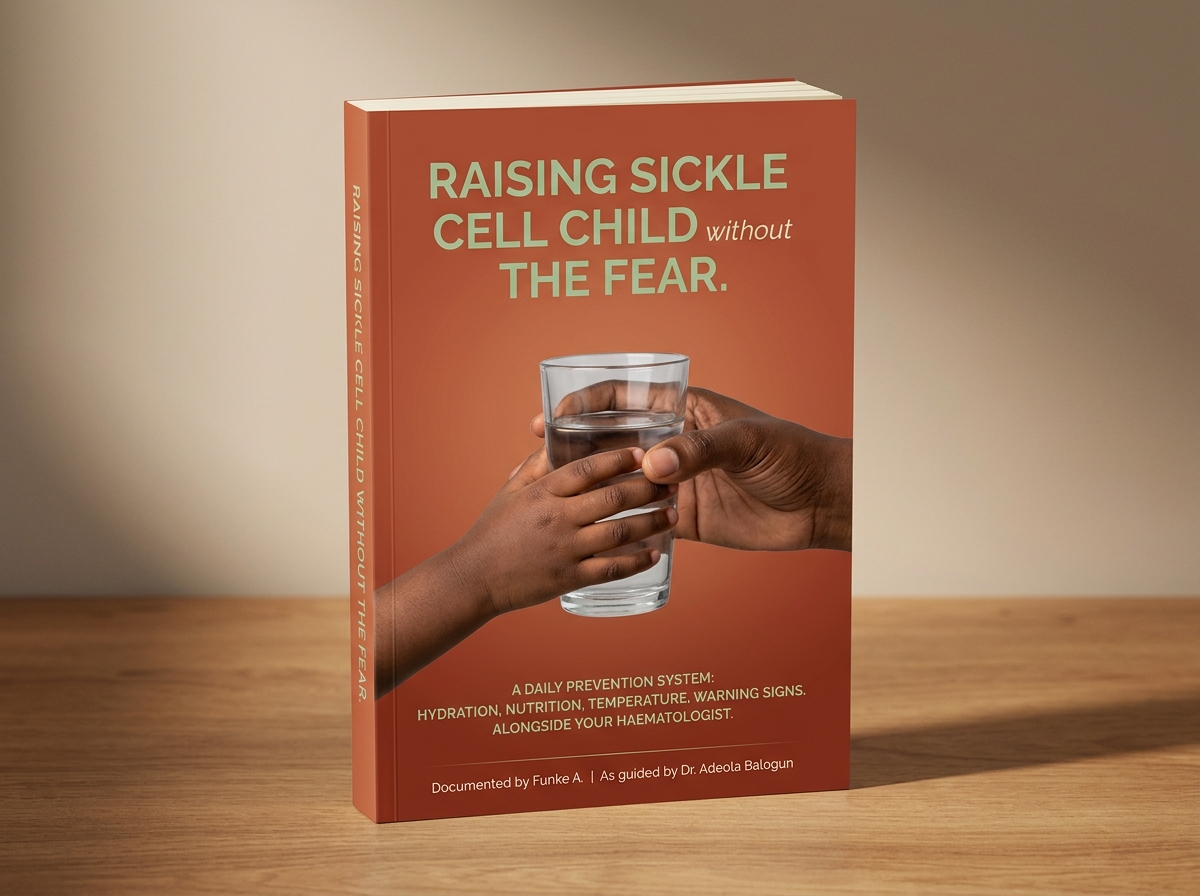
Raising Sickle Cell Child Without the Fear
A daily prevention system: hydration, nutrition, temperature, warning signs. Alongside your haematologist.
The Calibrated Hydration System
Specific daily water targets by weight and age. Morning, afternoon, evening targets. 5 early dehydration signs with actions.
The Blood Cell Nutrition Plan
Iron-rich foods, folic acid sources, anti-inflammatory meals. Your market, your kitchen. Foods your child will eat.
The Temperature Shield
Harmattan, rainy season, heat. Clothing, bathing, room temperature. Season-by-season management.
The Warning Signs Dashboard
6 early signs with specific actions for each. When to hydrate. When to monitor. When to go to hospital. The decision tree.
Alongside Your Haematologist
What to discuss. How to share your tracking data. Which tests. The daily system and the clinic together.
Instant download. Both bonuses included. 21-day guarantee.
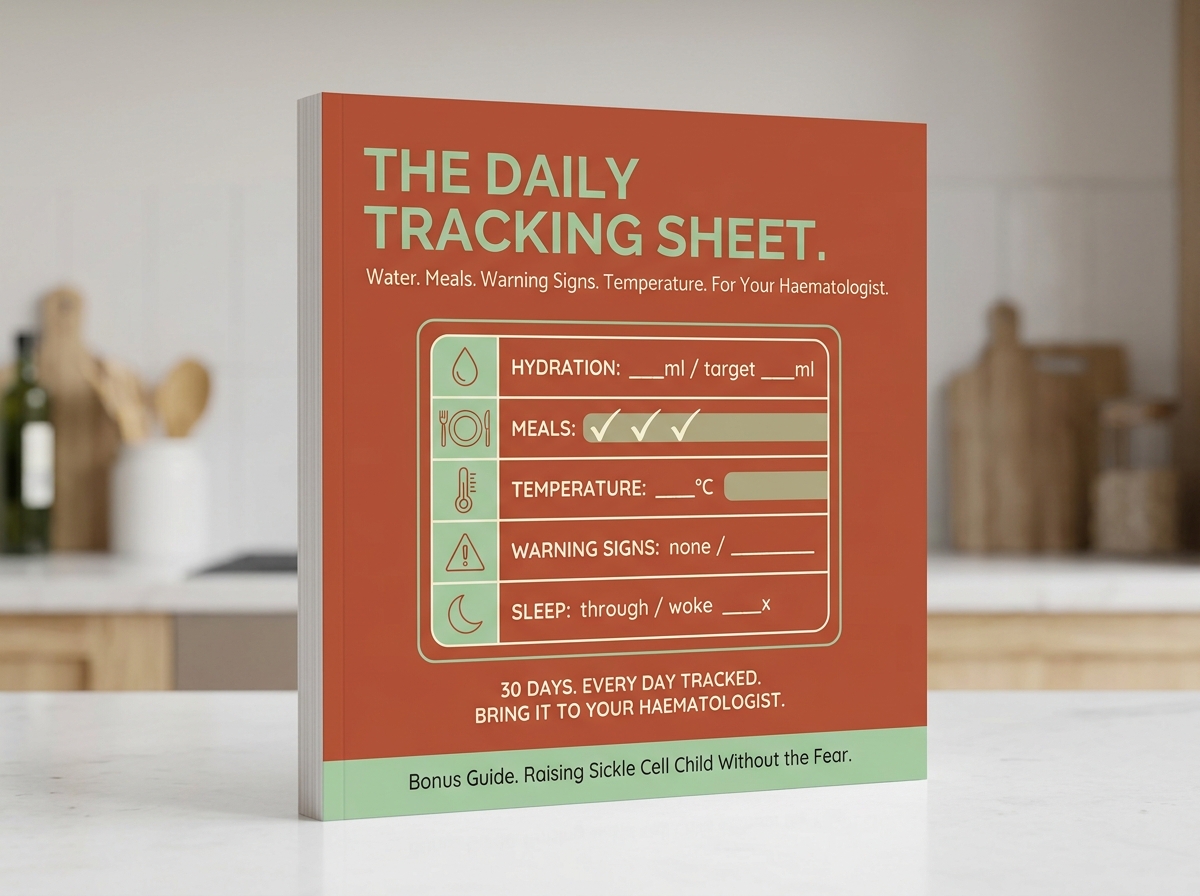
The Daily Tracking Sheet
Daily log: water intake, meals, warning signs, temperature, activity level. 30 days of data. Print it. Bring it to your haematologist. The daily system documented.
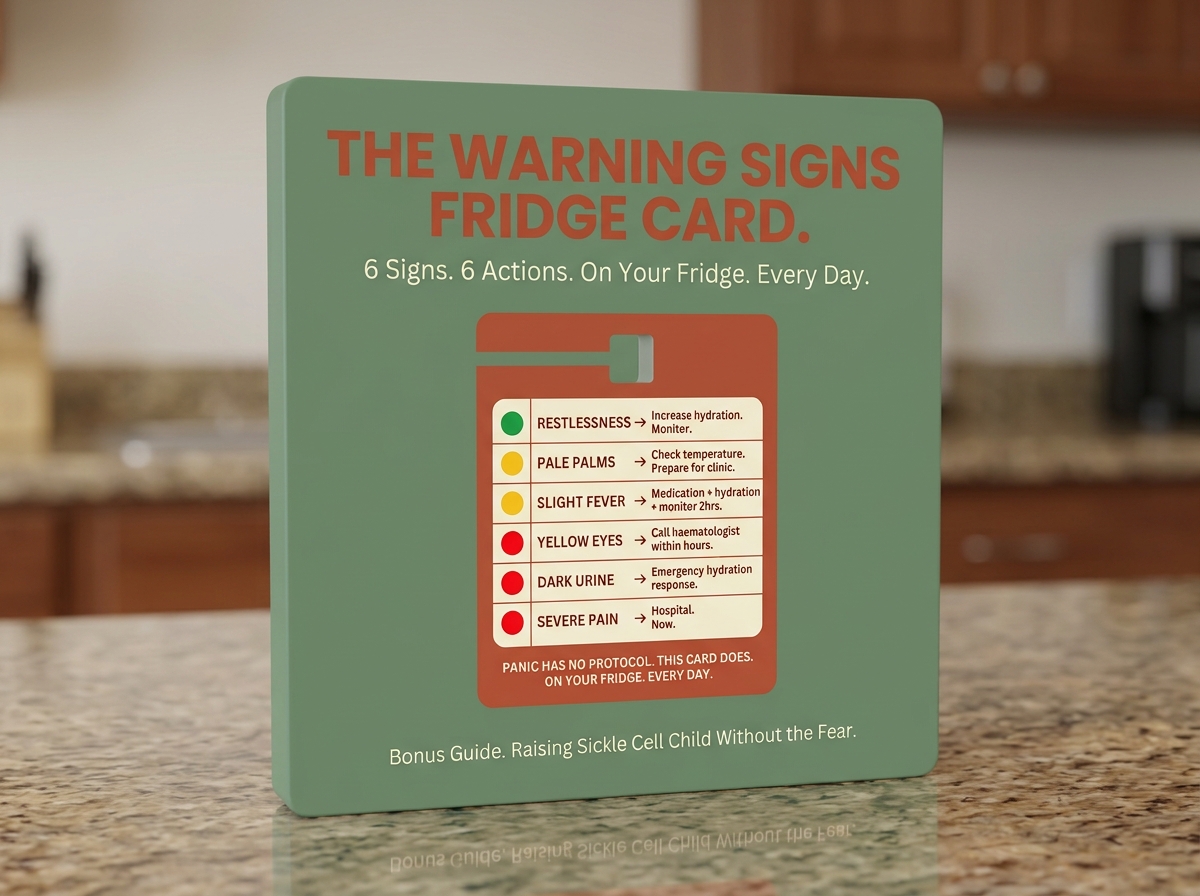
The Warning Signs Fridge Card
One laminated card for your fridge. 6 warning signs. 6 actions. What to do before the crisis fully develops. Visible. Daily. The dashboard that replaces panic.
21-Day Conditional Guarantee
Follow the daily system for 21 days alongside your haematologist. If it doesn't give you a clear, structured daily support system for your child, full refund. Keep both bonuses. This guarantee does NOT promise the prevention of sickle cell crises. Crises are a feature of the disease and cannot be fully prevented. It promises a daily system that helps support your child's health and may help reduce the risk.
A daily system or your money back. Alongside your haematologist.
Another Day of Fear Without a System
Another day of "keep them hydrated" without knowing how much. Another day of watching for signs you haven't been taught to recognise. Another day where the fear controls you because you have nothing to do except worry.
"Keep them hydrated" is a sentence. Your child needs a system.
The Fear Gets a Plan. Today.
Today: Calibrated hydration begins. Specific amounts. Specific times. This week: Blood cell nutrition plan active. On the fridge: Warning Signs Dashboard. 6 signs. 6 actions. At your next appointment: Daily tracking data for your haematologist.
N9,800. Less than one hospital visit co-pay. The daily system that supports your child between appointments. Alongside your haematologist.
P.S. #1: How much water did your child drink today? If you don't know the exact number, the Calibrated Hydration System is the first section to open. N9,800 for the daily water target that "keep them hydrated" never provided.
P.S. #2: When was the last time your child had a crisis? Before that crisis, were there warning signs you missed? The Warning Signs Dashboard teaches you to recognise 6 early indicators and what to do at each one — before the screaming, before the emergency drive.
P.S. #3: Dr. Adeola: "The parents with a system bring their children to the hospital less frequently for crises. Not because the disease is different. Because the daily support is different. Hydration, nutrition, temperature, warning signs — structured, daily, consistent. The disease is managed by the haematologist. The daily life is managed by the parent. Give the parent a system and the child gets better daily support." N9,800. The daily system. Alongside your haematologist.